Understanding TPRF's Finance, 2026 Edition
An Analysis of The Perl and Raku Foundation's 2024 Finances
In October 2024, I published an article analyzing the financial situation of The Perl and Raku Foundation (TPRF). Since then, I have left the board, and my life is now largely unrelated to Perl. I no longer have insight into TPRF's internal decision-making but I got a few suggestions to continue, so this article again analyzes TPRF's finances using publicly available data for the 2024 calendar year. There is an unavoidable delay between when nonprofit tax returns are filed and when they become public.
Executive Summary
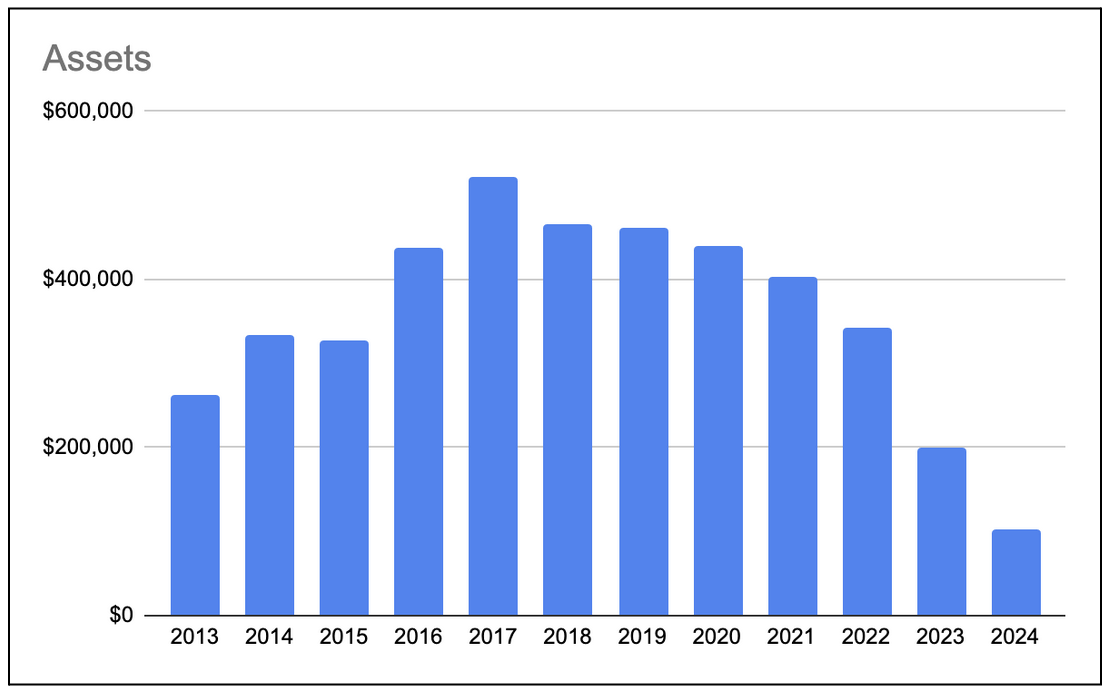
- Assets at end of 2023: $200,215
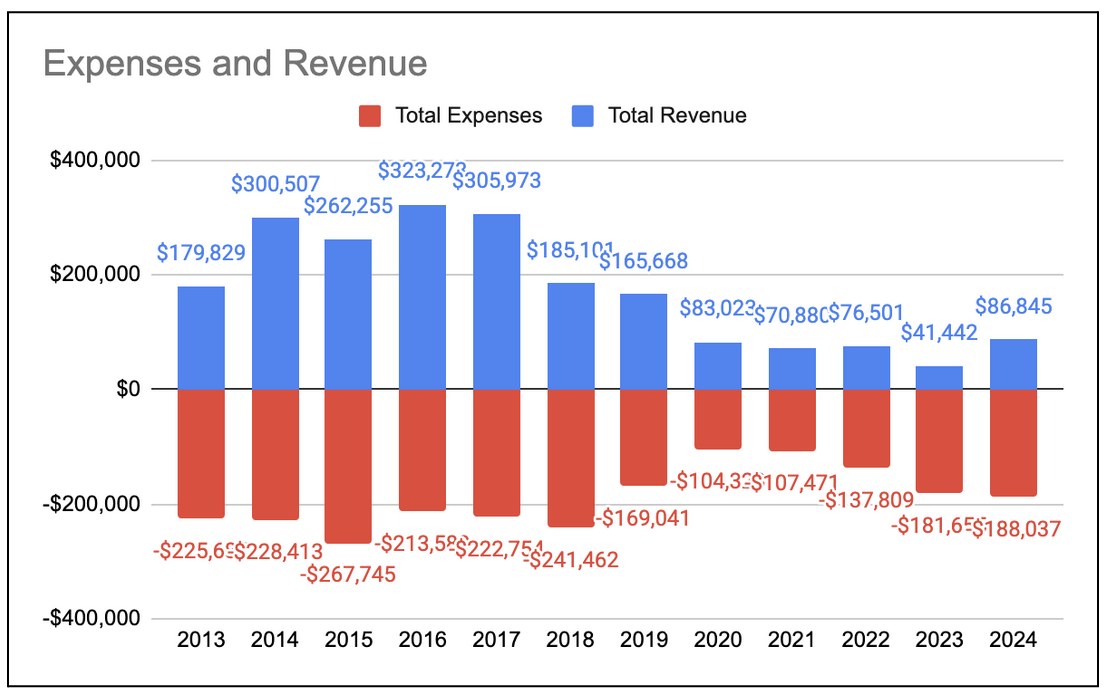
- Revenue in 2024: $86,845
- Expenses in 2024: $188,037
- Assets at end of 2024: $101,525
Revenue: A Positive Turn
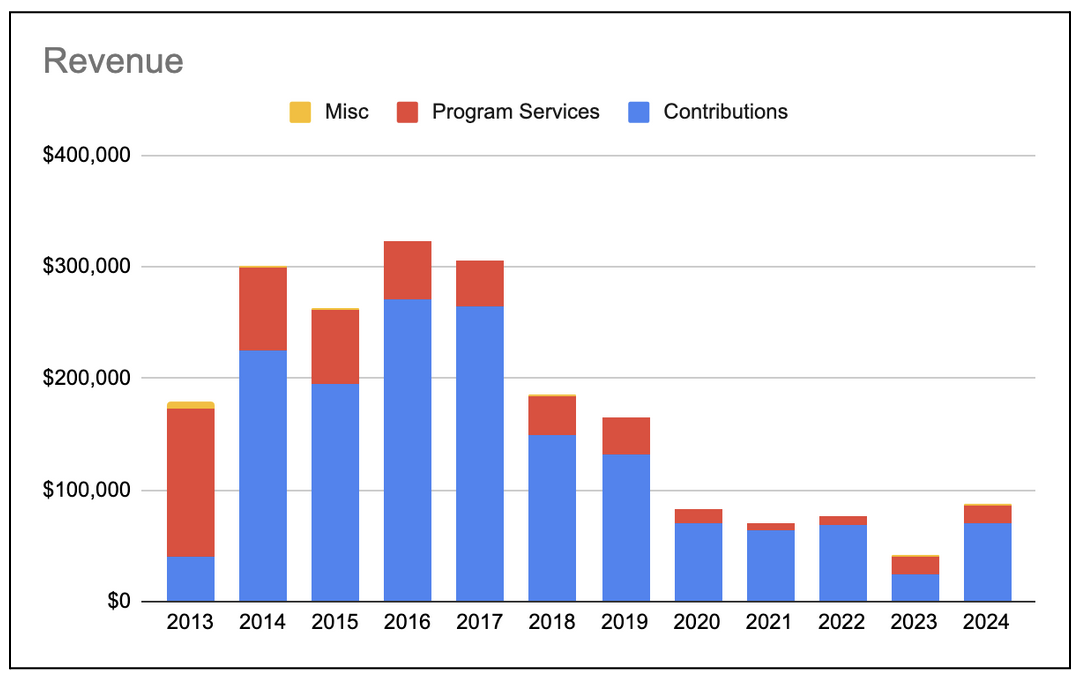
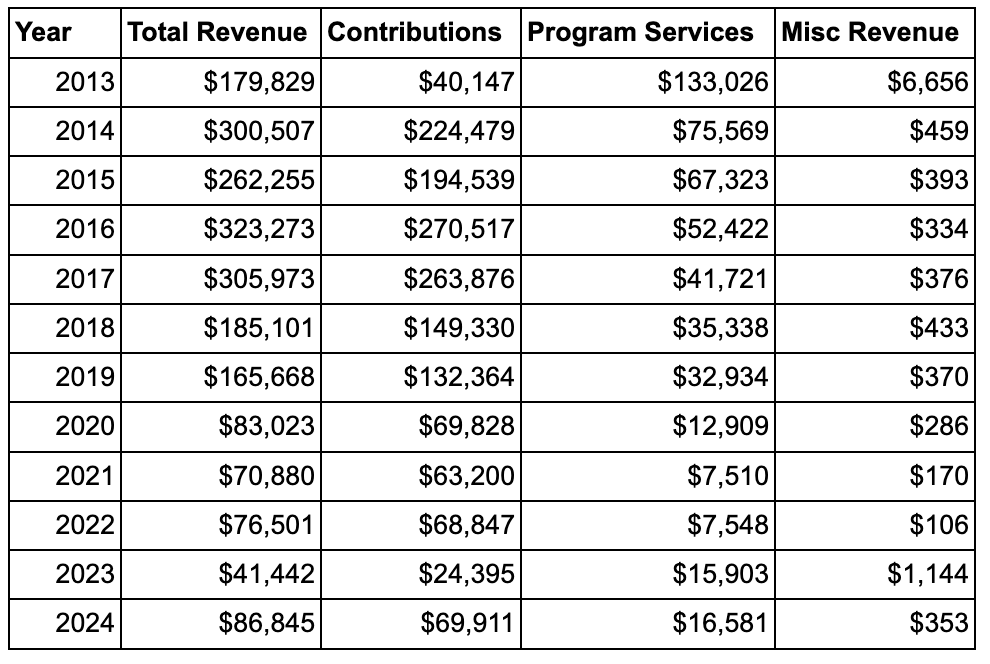
Total revenue in 2024 was $86,845, more than double the $41,442 recorded in 2023.
The increase came almost entirely from contributions (donations), which rose from $24,395 in 2023 to $69,911 in 2024. This suggests that fundraising efforts were effective. Of that amount, I sourced $10,000.
Program services revenue, which is primarily revenue from conference ticket sales, remained stable. It was $16,581 in 2024, compared to $15,903 in 2023.
Expenses: Still high
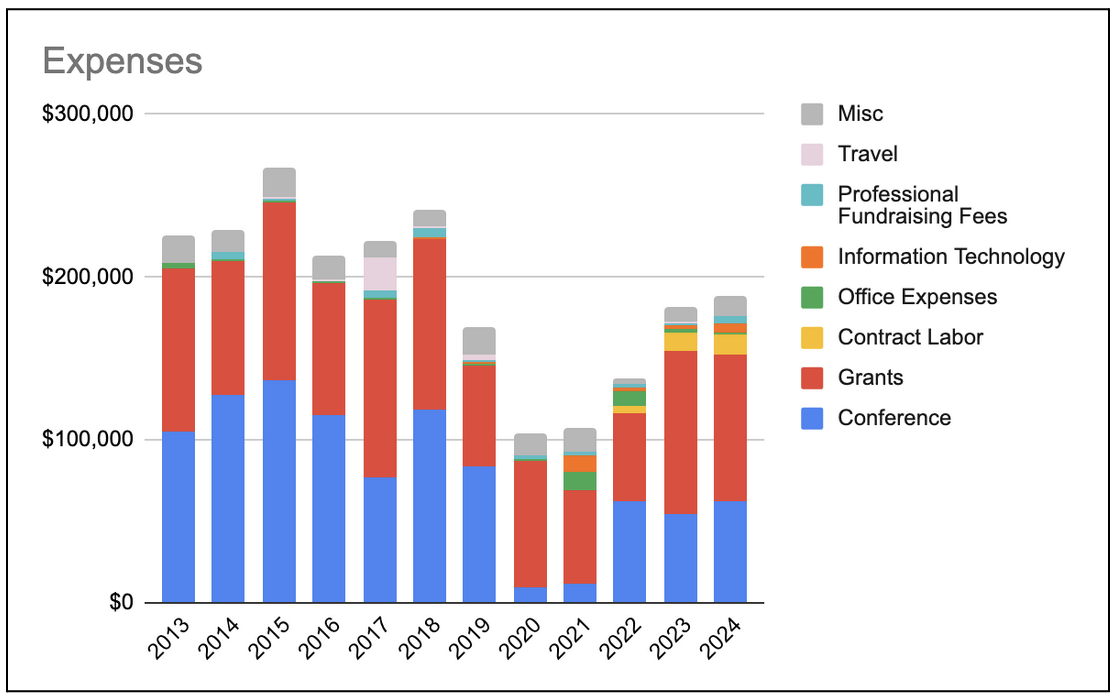
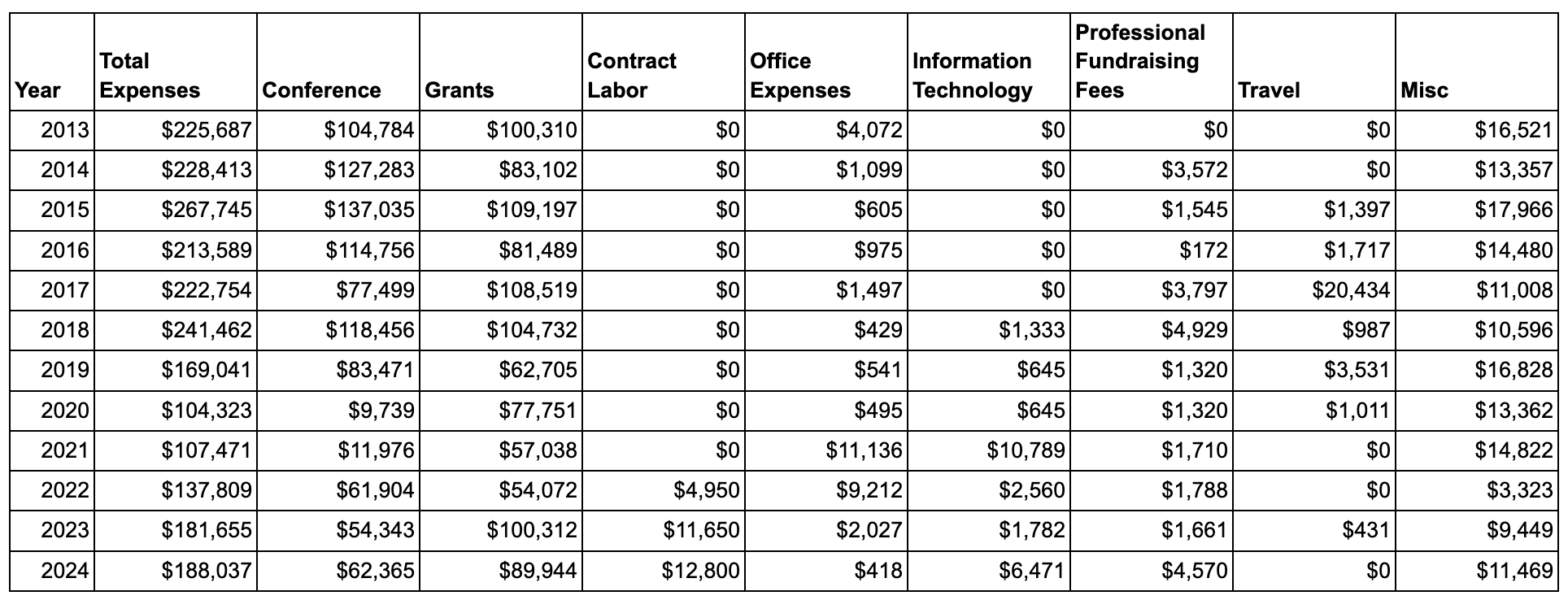
Total expenses in 2024 were $188,037, roughly the same as in 2023 ($181,655) and the highest level of spending since 2019.
The two largest categories continue to be Grants ($89,944, 47.8%) and Conferences ($62,365, 33.2%). Together, these two categories accounted for over 80% of total spending.
The foundation spent nearly $190,000 in a year where it earned only $87,000.
Assets: Cut in Half
At the end of 2023, TPRF held $200,215 in assets. By the end of 2024, that figure had dropped to $101,525.
In a single year, the foundation lost $98,690. TPRF would run out of money if this trend continued.
Cost Cutting: What Changed
TPRF does not publish a detailed expense breakdown, which makes external analysis difficult. That said, based on public information, several cost-saving changes appear to have occurred in 2024:
- The foundation stopped hiring an intern to support diversity in open-source software, saving $8,000 per year. This is unfortunate, but financially meaningful.
- Previous grant programs for work outside of core language development seem to have ended. I have not seen any calls for such grants since January 2024.
- I was also told that the 2025 conference was organized at a significantly lower cost than in prior years, which should help going forward.
Transparency
Beyond high-level numbers, it is virtually impossible to understand how the foundation spends its money.
There was a proposal by @Tib to leverage Open Collective, which would publicly show where funds come from and how they are spent. This would also make earmarked donations automatic and transparent, including clear allocation between Perl and Raku, which was requested at the previous conferences.
Increased transparency is critical for several reasons:
- Donor trust: When donors can see exactly how their contributions are used, they are more confident that their money is making an impact.
- Accountability: Publicly visible spending ensures that the foundation's leadership is held responsible for financial decisions and priorities.
- Long-term sustainability: Transparent reporting makes it easier to plan budgets, attract new donors, and justify continued support.
- Clear communication between communities: Transparency allows both Perl and Raku communities to understand how resources are allocated, preventing misunderstandings or perceived favoritism.
A Call to the Community
My employer donates to TPRF through a gift-matching program every year and I deeply appreciate that support.
Many tech companies in the 2000s relied heavily on Perl, often at no cost. Supporting its ongoing development is a way of saying thank you. It is never too late.
 Ex-Secretary, The Perl Foundation. makoto@perlfoundation.org | https://x.com/heismakoto
Leave a comment