GTC 2.20 brings a huge amount of new features again (described in this post) and is starting an additional, more trimmed down, high level API, geared more toward what designers expect. But it also comes with new documentation and error handling, the two most important things that were missing for a professional distribution.
As already reported, I'm writing this color library. Recently I created my own test function for it. And since it was easier that I thought, I want to show you how, so you can write your own!
Finally - GTC 2.0, an all in one color library, is released ! This post will not be rehash (of) the (very) fine manual, but give you a sense what you can achieve with this software and why it is better than any other lib of that sort on CPAN. If you like to look under the hood of GTC, please read my last post.
Graphic::Toolkit::Color 1.9 brought several big new features which I will write about when 2.0 comes out - just to sum up what changed since 1.0. This time I want to describe the internal changes, since this release completed an in-depth rewrite. So this will be about software engineering, architecture and coding style. TLDR: simple, clear, DDD, OO by composition and arg and a color space DSL!
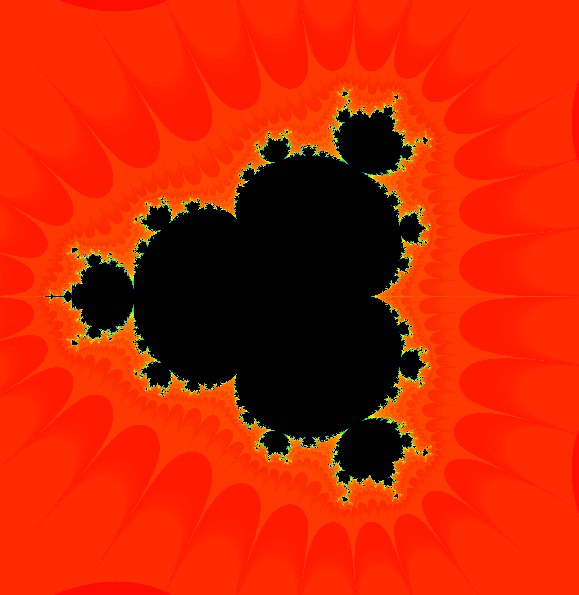
Yes, this is a Mandelbrot fractal with three heads. No cloning needed, just multiply z to the power of four and proceed as usual. Well all this and so much more contains the latest release of Juliagraph 0.7. Intro here. All I wrote about the ="https://blogs.perl.org/users/lichtkind/2025/02/polishing-thr-t-urtle.htm…
I released Juliagraph an interactive fractal painter for Julia and Mandelbrot types of fractal.
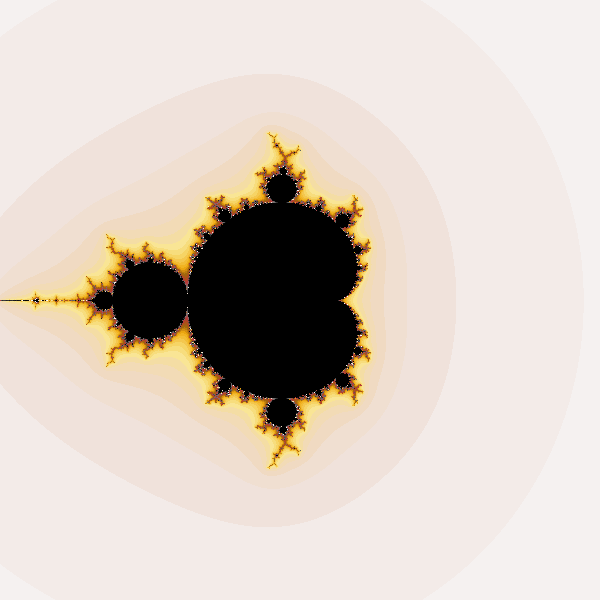
Whohoo release 1.7 (and 1.6) brought a thorough architectural rewrite, new color spaces (HSV, HWB, YIQ), new formats ([named] array, string and css_string), choosable value ranges, closed both open issues, and introduced the named argument API I wrote last time about. And as promised, this post is about the methods: distance, set, add and blend.
After written about the origin and goals of Graphics::Toolkit::Color -- let's take a look at the public methods and make it a little study of good API design. But lets work our way up from a few examples:
At the recent YAPC::EU (still running) I gave a talk about my latest CPAN module: Graphics::Toolkit::Color (in short GTC - v1.53). It went a little out of hand and even worse: some of the key thoughts I did not formulate as clear as wanted. That is why I use this channel to correct that. In this first part I outline the goal of the module and the next part will be about the design principles of the public API, moving than into implementation details and the general issues when dealing with colors.
The most requested feature of the Cellgraph is now in operation: Colors.
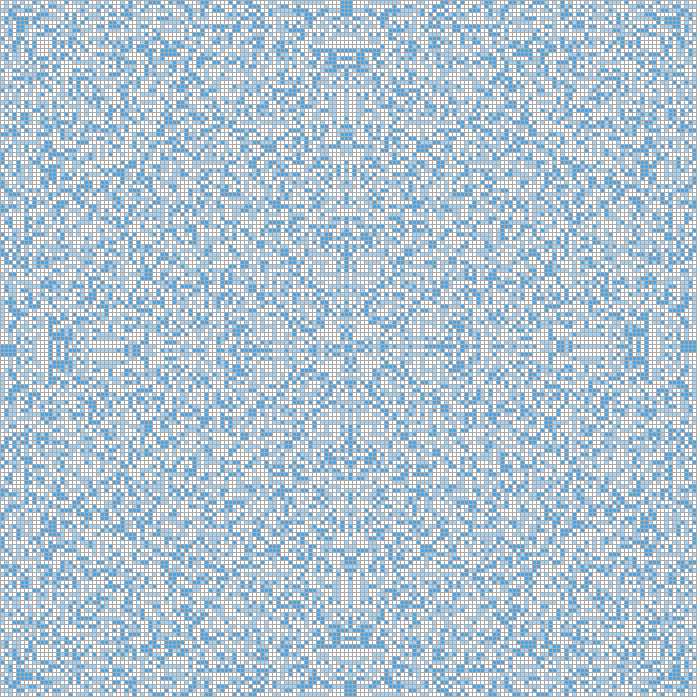
I added one panel with all the options and functions to control them. It is a little complex, but well documented (see here). In short you can load and save from and to the config file single colors and color sets under special names. And then you have direct access to the gradient and the complimentary function of Graphics::Toolkit::Color. Reverting to the default grayscale is always possible with an push on a button.
Previously I showed parts of the API of my new module Graphics::Toolkit::Color. This time I want to mention some bits about the code base, which demonstrate what I tried to say long ago (sorry for the long delay i hope I can complete the series).
Just released Graphics::Toolkit::Color for the purpose to create computationally harmonic color pallets (2-3 lines max for most needs). It is in fact a chunk out of Chart I needed to reuse in other projects as the Harmonograph. And as you can see in the SEE ALSO section of the POD - I'm aware that there are plenty other modules doing, parts, similar stuff or even more.
 Kephra, Articles, Books, Perl, Programming